Sunday, March 5, 2017
Vanport Storyline
After learning that we will be hosting a very special visitor in our classroom on Tuesday, March 7th, students have been working hard to learn as much as we can about Vanport. Students have researched what the city looked like and why it was built. Last week we created a map of the city and now we are working on our characters that live in the city of Vanport.
Ed Washington moved to Vanport from Alabama in 1944 when his father got a job at the Vanport shipyards. Although his family lost their home in the flood, they were able to stay in Portland. As an adult, Ed has been a member of the Portland NAACP and a civil rights leader as well.
Practice Testing with 6th Graders
We have started preparing for the Smarter Balanced assessments which we will be starting on April 11th. Since these tests are new to third graders, we have partnered up with Ms. Ferris and the 6th graders so they can walk students through some of the practice tests and show us the ropes.
Beanstalks and Measurement
To culminate our current unit in Math, students worked on a project that combines art, literature, fractions, measurement, and data analysis. After reading the book, Jim and the Beanstalk, students created their own beanstalks in partner groups. Next, they measured and labeled their beanstalks and leaves in both inches and centimeters. Over the next two days, we represented this data in different ways.
Thursday, January 5, 2017
Living Museum Presentations and Salmon Release
The last week of school before winter break was a busy one in third grade. On Tuesday we invited 2nd grade, 1st grade, and parents into our classroom to experience different learning stations and learn about Native American life, culture and traditions as well as the Salmon life cycle. These stations gave younger students a hands on chance to experience what we have been learning about this fall.
On Wednesday we bundled up and headed to Wapato park to say goodbye to our salmon fry. Nicole Thill from the Spotlight newspaper joined us as well. Check out the article she wrote about third graders and our units this fall: http://portlandtribune.com/sl/ 336960-217040-academy- students-take-salmon-eggs- into-the-wild
Thanks to all the parents and community members who joined us that morning as well.
Wednesday, November 2, 2016
Eagle Creek Salmon Spawning and Cascade Fish Hatchery
Last Friday we embarked on a day long journey to visit the spawning salmon at Eagle Creek in the Columbia River Gorge and also visited the Cascade Fish Hatchery. We saw salmon in two different habitats, learned lots and enjoyed the beautiful fall weather. Thanks to everyone who joined us. It was an amazing day!
After we arrived we met with our groups to read the Yakima tribe's folktale of Old Man Rattlesnake and the Salmon People.
Then we made our way to the creek to observe the salmon in their natural habitat.
Next, we visited the Cascade Hatchery and got to learn about how they create a healthy living environment for the salmon eggs and fry before letting them go. We even got to feed the fish.
After lunch we took some data collection of the natural habitat before loading the bus to return to SIA in time for the annual Harvest Festival. :)
Pumpkin Patch and Pumpkin Seed Math!
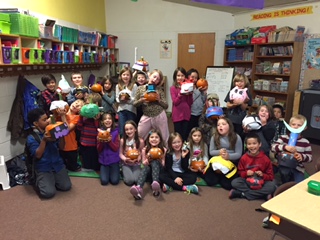
On October 19th the 3rd graders were able to experience the Sauvie Island Pumpkin Patch and all it has to offer our community. They learned about the different animals in the barn, the crops in the fields, the pleasure of climbing on the haystacks and most of all picking the perfect pumpkin. Once back in the classroom these experiences transitioned into an applied math project. Students recorded qualitative (using their senses) and quantitative (circumference, weight and number of creases) data about their pumpkins. They later used this information to make predictions about how many seeds would be in the pumpkin. Once this was done, an amazing parent volunteer helped them open up the pumpkins so they could estimate the number of seeds each contained and then count them. The students practiced grouping which is a building skill for multiplication, while some of the other pumpkin seeds were roasting in the kitchen.
Once roasted, they all took part in tasting roasted pumpkin seeds, fresh from the oven. The next day, Chef Brodie was able to use the rest of the carved pumpkins by roasting the pumpkin pieces for the school to enjoy on the salad bar. These are all examples of applied learning that occur when bridging classroom and community. Special thanks to Jessica Jacobsen for leading the field trip and activity, Eve Foster for supporting in the classroom, and all the parent helpers who joined us at the Pumpkin Patch. :)
Cathlapotle Plankhouse Visit
On a Sunny Tuesday in October, third graders loaded the bus and headed to the Ridgefield Wildlife Refuge in Washington. We had talked extensively about how to prepare for the potential weather we might face, only to end up with the most gorgeous and sunny fall day. We spent the morning with Ranger Josie, learning about the local habitat and going on a tree walk.
After lunch we were able to spend some time in the Cathlapotle Plankhouse, a replica of a Chinookan plankhouse like the ones that used to exist in the plankhouse community a few hundred yards away from where we were standing. This was an amazing experience and gave us great ideas on how to make our in class plankhouse replicas historically accurate. It was a educational and amazing day!
Subscribe to:
Posts (Atom)